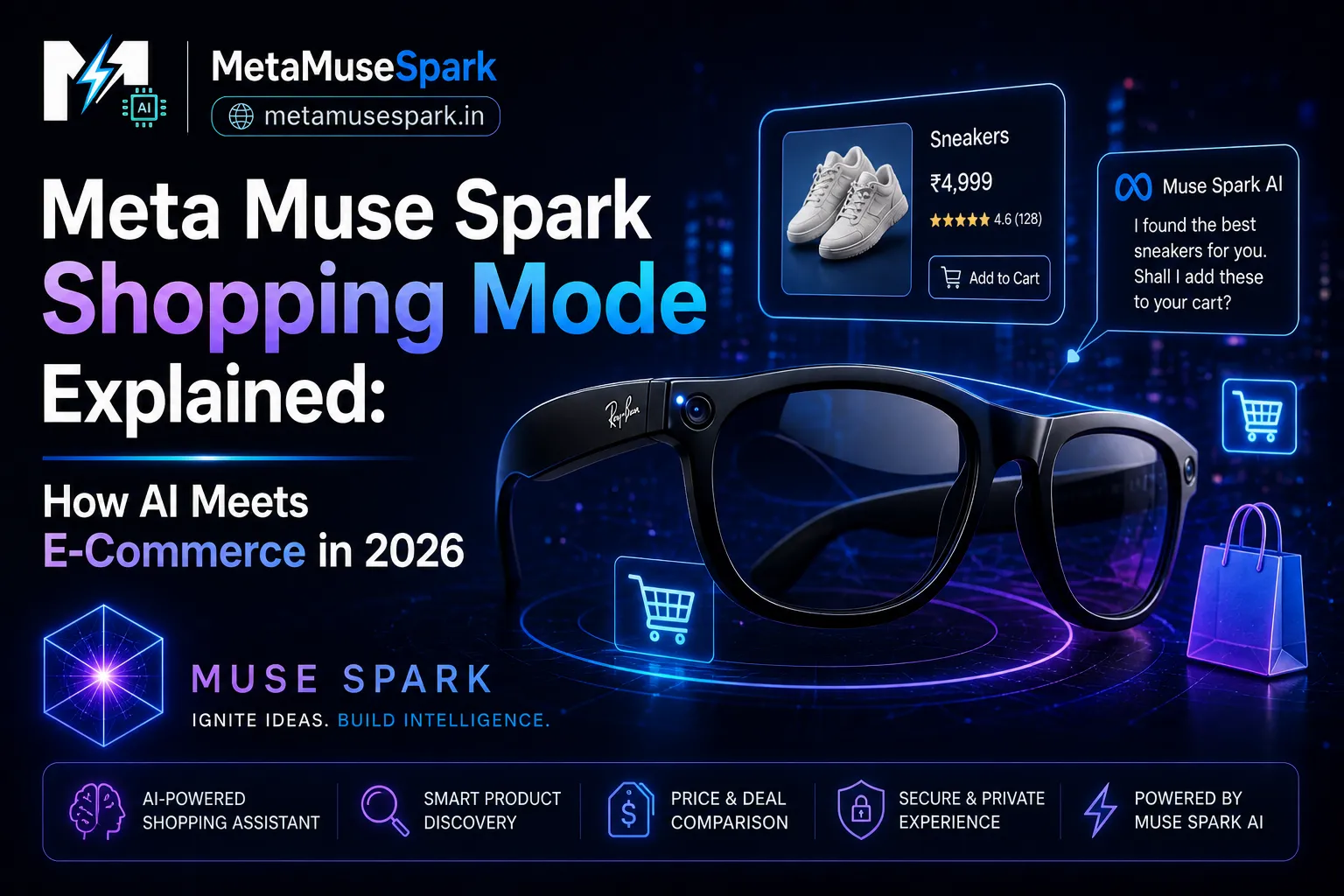
Meta Muse Spark Shopping Mode Explained:
How AI Meets E-Commerce in 2026
Meta Muse Spark’s Shopping Mode is the most commercially ambitious feature in the model’s launch — combining AI intelligence with the behaviour data of 3 billion users to create a personalised, conversational shopping experience. Here is everything you need to know.
When Meta launched Muse Spark on April 8, 2026, the technical community focused on benchmark scores and the open-source controversy. But there is one feature that tells you more about Meta’s true ambitions than any benchmark number: Shopping Mode.
Shopping Mode is not just a product search tool. It is Meta’s attempt to build the most commercially powerful AI feature in the world — one that connects conversational AI intelligence with the richest behavioural data set on earth. Meta knows what you like on Instagram. It knows what you share on Facebook. It knows what creators you follow, what posts you engage with, and what brands you interact with. Shopping Mode connects all of that to Muse Spark’s reasoning capabilities — and aims to become the AI shopping assistant that actually knows you.
This is a significant bet. If it works at scale, Shopping Mode could add meaningful revenue to Meta’s already dominant advertising business and position Meta as a serious competitor to Amazon and Google in the AI-assisted commerce space. If it fails, it risks feeling invasive and undermining user trust. This article breaks down exactly how Shopping Mode works, what makes it different from competitors, and what it means for users in India and around the world.
💡 What is Shopping Mode? Shopping Mode is a Muse Spark feature that surfaces product recommendations drawn from content users engage with across Instagram, Facebook, and Threads — combined with AI-powered comparison and purchase assistance. It is currently rolling out in the US first.
How Shopping Mode Actually Works
Shopping Mode combines three distinct capabilities that, when working together, create something genuinely new in the AI assistant space.
1. Personalised recommendations from your social graph
The first layer is Meta’s data advantage. When you ask Muse Spark in Shopping Mode for a recommendation — say, “suggest a good running shoe for someone who runs 5km a day” — it does not just search the internet for popular running shoes. It draws on what Meta already knows about you from your Instagram and Facebook behaviour.
If you follow running influencers on Instagram, engage with fitness content on Facebook, or have previously interacted with sportswear brands on any Meta platform, that context shapes the recommendations you receive. The model is designed to “cite recommendations and content people share across Instagram, Facebook, and Threads,” as Meta described in its official launch announcement on the Meta newsroom.
This is fundamentally different from how ChatGPT Shopping or Google Shopping AI works. Those systems search the public web for products and prices. Muse Spark’s Shopping Mode draws on your personal social engagement history — which means the recommendations are theoretically much more aligned with your actual taste and preferences.
2. AI-powered product comparison
The second layer is Muse Spark’s core reasoning capability applied to shopping decisions. Like ChatGPT’s shopping assistant, Muse Spark can compare products across multiple dimensions — listing the pros and cons of each option, explaining the differences between models, and helping you understand which choice best fits your specific needs and budget.
What makes this notable is that Muse Spark’s native multimodal vision means it can analyse product images, read nutritional labels, compare specifications from photos, and understand visual differences between products — not just text descriptions. You can take a photo of a product in a shop and ask Muse Spark to find it cheaper online, or compare it to alternatives.
3. Frictionless purchase pathways
The third layer is the commercial infrastructure. Shopping Mode does not just make recommendations — it provides direct purchase links, making it easy to complete the transaction without leaving the Meta ecosystem. As Axios reported at launch, the model “comparing different items for you, listing the pros and cons of each, with links to make it easy to buy the product that appeals to you.”
Over time, Meta plans to deepen this integration with brand partnerships and creator content. When a creator you follow on Instagram recommends a product, that recommendation can flow directly into your Muse Spark Shopping Mode experience — with credit given back to the creator. This creates an incentive structure that rewards creators for producing genuinely useful product content, which in turn feeds more high-quality data into Shopping Mode.
New to Meta Muse Spark? Start with our complete beginner’s guide to using Muse Spark for free before diving into Shopping Mode.
Shopping Mode vs ChatGPT Shopping: Key Differences
ChatGPT Shopping (powered by GPT-5.4) was one of the most talked-about AI shopping features in early 2026. But Muse Spark’s Shopping Mode is built on a fundamentally different model. Understanding the differences helps you choose the right tool for different shopping scenarios.
ChatGPT Shopping searches the public web for product information, prices, and reviews — then uses GPT’s reasoning to compare options and recommend the best fit. It is excellent for objective, research-driven shopping decisions where you want a broad view of what is available across many retailers.
Muse Spark Shopping Mode, by contrast, is personalised from the ground up. It starts with what Meta knows about you — your social behaviour, your interests, your community — and builds recommendations from that foundation. It is better when you want recommendations that feel personally relevant rather than objectively comprehensive.
There is also a significant difference in data privacy implications. ChatGPT Shopping does not access your personal social media behaviour. Muse Spark Shopping Mode explicitly uses your Instagram and Facebook engagement data. Whether you see this as a feature or a risk depends entirely on your attitude towards Meta’s data practices — a topic we cover in detail in our full Muse Spark review.
Personalised to you
Uses your Instagram follows, Facebook likes and brand interactions to tailor recommendations — not just generic web results.
Visual product search
Photo a product in a shop and ask Muse Spark to find it online cheaper, or compare it visually with alternatives.
Creator integration
Recommendations from creators you follow on Instagram and Threads feed directly into Shopping Mode results with attribution.
Direct purchase links
One-tap purchase pathways integrated directly into the AI conversation — no switching between apps or browsers.
AI comparison engine
Side-by-side product comparisons with pros, cons, specifications and personalised fit analysis for your specific needs.
Everywhere on Meta
Coming to WhatsApp, Instagram, Facebook, Messenger and meta.ai — so you can shop with AI wherever you already are.
The Business Case: Why Shopping Mode Is Meta’s Most Important Bet
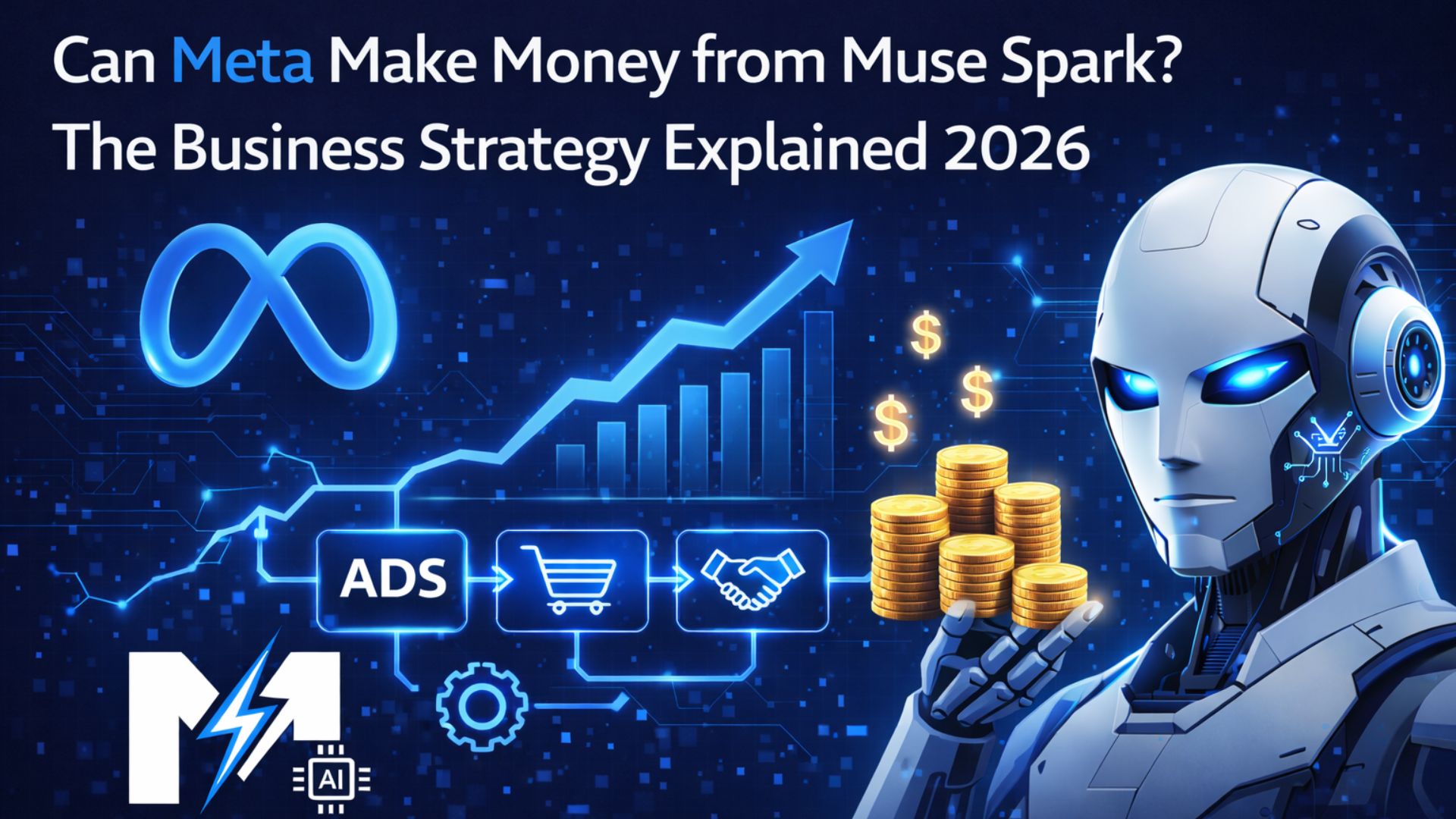
Meta’s advertising business generated $201 billion in revenue in 2025. Almost all of that came from ads on Facebook, Instagram, Reels and WhatsApp. The fundamental limitation of advertising is that it is interruptive — users see ads while doing something else, and conversion rates reflect that friction.
Shopping Mode represents a completely different commercial model. Instead of showing you an ad for a running shoe while you are scrolling through friends’ photos, Meta can now help you actively find and buy the right running shoe when you are already in a shopping mindset — and get paid for facilitating that transaction through affiliate revenue, brand partnerships, or premium API access fees.
This positions Muse Spark’s Shopping Mode as Meta’s entry into the commerce AI market that Amazon has dominated through Alexa and its recommendation engine. But Meta has something Amazon lacks: a social graph of 3 billion people and the richest behavioural data set in consumer technology. If Shopping Mode can effectively translate that data advantage into better product recommendations, it could challenge Amazon in the AI-assisted discovery phase of shopping — the moment when a consumer is deciding what to buy, not yet where to buy it.
⚠️ Privacy note: Shopping Mode’s personalisation power comes at a cost — it uses your social media behaviour data in ways that are subject to Meta’s broad privacy policy. Before using Shopping Mode for sensitive purchases (medical products, financial decisions, personal care), review Meta’s data usage terms at facebook.com/about/privacy.
How to Use Shopping Mode in Muse Spark
Shopping Mode is being rolled out gradually as part of the broader Muse Spark release. Here is how to access it once it reaches your region.
First, open the Meta AI app or visit meta.ai and log in with your Facebook or Instagram account. Once inside, look for a Shopping mode option — this may appear as a dedicated mode toggle, a shopping bag icon, or as a contextual prompt when you ask a product-related question. The exact interface varies as Meta continues to refine the rollout.
To get the best results from Shopping Mode, be specific about your needs. Instead of asking “recommend headphones,” try “recommend wireless headphones under Rs 5,000 for someone who exercises and commutes by metro daily.” The more context you give, the more Muse Spark can personalise the recommendation using both its AI reasoning and your social behaviour data.
You can also use Shopping Mode’s visual capabilities. If you see a product in a shop, on a billboard, or in someone’s Instagram post, take a photo and upload it to Muse Spark with a question like “can you find this product online and tell me if there is a better alternative at a similar price?” This visual search capability is one of the most practical applications of Muse Spark’s native multimodal vision.
Shopping Mode for Indian Users: What to Expect
India is one of Meta’s most important markets, with hundreds of millions of active WhatsApp, Instagram and Facebook users. However, Shopping Mode is rolling out in the US first, with other countries to follow in the coming months of 2026.
For Indian users, there are both exciting opportunities and important considerations. On the opportunity side, India’s rapidly growing e-commerce market — with platforms like Flipkart, Meesho, Amazon India, and Myntra — represents exactly the kind of product-rich ecosystem where AI-assisted shopping discovery could add genuine value. If Muse Spark’s Shopping Mode integrates with Indian e-commerce platforms and understands Indian consumer preferences, it could become a genuinely useful tool for millions of Indian shoppers.
On the consideration side, India’s Digital Personal Data Protection (DPDP) Rules, while notified in November 2025, include limited provisions for AI-specific data governance. The consent framework for how Muse Spark uses Indian users’ Instagram and Facebook behaviour data for Shopping Mode recommendations is not yet clearly defined. As with any AI product from a major platform, Indian users should be aware of what data they are sharing and for what purpose.
✅ Best use cases for Shopping Mode: Electronics comparisons, fashion and lifestyle products, fitness gear, travel accessories, home goods — any purchase where personal taste matters and you want recommendations that align with your established preferences rather than just the most popular options.
Vibes AI and the Future of Meta Commerce
Shopping Mode is just the beginning of Meta’s commerce AI ambitions. The company has also announced Vibes AI — a video creation feature that will eventually be powered by Muse Spark and is aimed at brands and creators producing short-form video content for Instagram Reels and Facebook.
The connection between Vibes AI and Shopping Mode is significant. As brands use Vibes AI to create product videos, those videos flow into the Instagram and Facebook content ecosystems that Shopping Mode draws on for personalised recommendations. It creates a virtuous cycle: brands create AI-generated content with Vibes AI, that content reaches users through organic social, and Shopping Mode then surfaces that content as personalised product recommendations to users who have shown relevant interest signals.
This end-to-end AI commerce loop — from brand content creation to personalised user recommendation to frictionless purchase — is what makes Meta’s commercial AI strategy genuinely different from OpenAI’s or Anthropic’s. Neither of those companies has the social platform infrastructure to execute this kind of integrated AI commerce experience. Meta does.
Want to understand Meta’s full AI business strategy? Read our deep dive: Can Meta Make Money from Muse Spark? The Business Strategy Explained.